


The wrong adhesive can leave projects peeling, stained, or difficult to repair. A formula that grabs immediately may be frustrating when you need time to align materials, while another may not bond the surfaces you have in mind. Choosing the best spray adhesive starts with what you're joining and how the finished project will be used. Here's how to narrow your options before buying.
What Is Spray Adhesive and How Does It Work?
Spray adhesive, sometimes called spray glue, is applied in a thin mist, usually from an aerosol can. As its carrier evaporates, adhesive remains on the surface to bond materials when joined. Spraying can cover broad areas more quickly than brushing on traditional glue, with less spreading required. However, overspray can affect nearby surfaces, and some installations call for paste rather than spray.
Types of Spray Adhesive Explained
Different labels describe bonding goals or intended materials, so categories can overlap.
|
Type |
Typical use |
Repositioning |
|
Permanent spray adhesive |
Crafts, displays, long-lasting assemblies |
Usually limited after joining |
|
Repositionable spray adhesive |
Temporary layouts and removable displays |
Often allows repeated adjustment |
|
Heavy-duty spray adhesive |
Approved panels and demanding installations |
Varies by formula |
|
Multipurpose spray adhesive |
General repairs and mixed-material projects |
Varies by formula |
|
Specialty adhesive |
Foam, upholstery, fabric, or certain plastics |
Product-specific |
With a spray contact adhesive, the instructions may require coating both surfaces and allowing a specific tack period before joining them. Don't assume similarly named products can be applied the same way.
6 Key Factors When Choosing a Spray Adhesive
Read the label and technical information rather than choosing solely by price or claims of maximum strength.
- Material compatibility: Check both surfaces, not just one. For instance, a spray adhesive for plastic must suit the specific plastic, and a spray adhesive for foam board needs approval for its core. Solvents in some formulas can damage polystyrene foam. Test delicate paper and fabric for staining or soak-through.
- Bond strength: Consider the finished item's weight and how much wear the bond will need to withstand over time. The strongest spray adhesive isn't necessarily the right choice for delicate crafts or projects requiring future removal.
- Tack and working time: Tack time refers to how long the adhesive takes to reach its recommended bonding stage. Working time is the period available for positioning and bonding. Final bond strength may develop later. Always follow the product's stated timing.
- Coverage: Compare stated square-foot coverage with your project area. Actual coverage depends on the surface's absorbency and the manufacturer's recommended application method.
- Working conditions: Temperature, humidity, and exposure to heat or moisture can affect performance. Confirm that the formula is approved for indoor or outdoor use as needed.
- Safety and emissions: Check the product's volatile organic compound (VOC) content and follow its safety instructions to manage fumes and fire risks. A low-VOC claim does not eliminate the need to follow safety precautions.
How to Apply Spray Adhesive Safely and Effectively
The following are general guidelines for applying spray adhesive. Application requirements vary by product, so always follow the manufacturer's instructions for best results.
- Prepare the surfaces. Remove dirt and grease, allow materials to dry, and protect adjoining areas from overspray.
- Set up a safe workspace. Follow the label's ventilation and protective-equipment guidance. Keep aerosol sprays away from ignition sources.
- Test first. Shake as directed, then test the spray pattern and material compatibility on scrap or an inconspicuous area.
- Apply evenly. Use the specified spraying distance and number of coats. Avoid puddles and join the materials when the adhesive reaches the manufacturer's specified bonding stage.
- Press and allow to set. Apply even pressure as instructed and respect any curing period before using the item.
When Wallpaper Paste Is the Better Choice
Traditional unpasted wallpaper generally requires a compatible wallcovering paste, applied to the paper or wall according to the manufacturer's instructions. General-purpose aerosol adhesives may not provide the slip needed for pattern alignment or the installation and removal properties the wallcovering requires. Pre-pasted and peel-and-stick wallpapers have different instructions, too.
For wallpaper projects, be sure to consult ROMAN's wallcovering adhesive guidance before choosing a product.
Find the Right Adhesive for Your Project

For compatible crafts, upholstery, and assembly projects, explore ROMAN Multi-Purpose Spray Adhesive. With high tack and fast grab, it is an ideal spray adhesive for fabric, foam, fiberglass, cork, metal, plastic, and more. Review its approved materials and application instructions to see if it's right for your project.
FAQs
How long does spray adhesive take to dry?
Drying time depends on the formula and application conditions. An adhesive may feel dry to the touch before reaching its final bond strength, so follow the manufacturer's instructions for bonding and curing.
How do you remove spray adhesive residue?
Use a remover or cleaning method approved for both the adhesive and the underlying surface. Test a hidden spot first. Avoid aggressive scraping or unapproved solvents that could damage finishes.
Is spray adhesive permanent?
Not always. Some spray adhesives form permanent bonds, while others are designed for temporary or repositionable applications. Brief adjustment time before a permanent adhesive sets does not make the finished bond removable.
Recent Posts
-

Wallpaper Removal: Strip, Skim Coat, or Prime?
read more >> -

Choosing the Best Spray Adhesive
read more >> -

How to Stick Wood Panels to Walls Without Nails
read more >> -
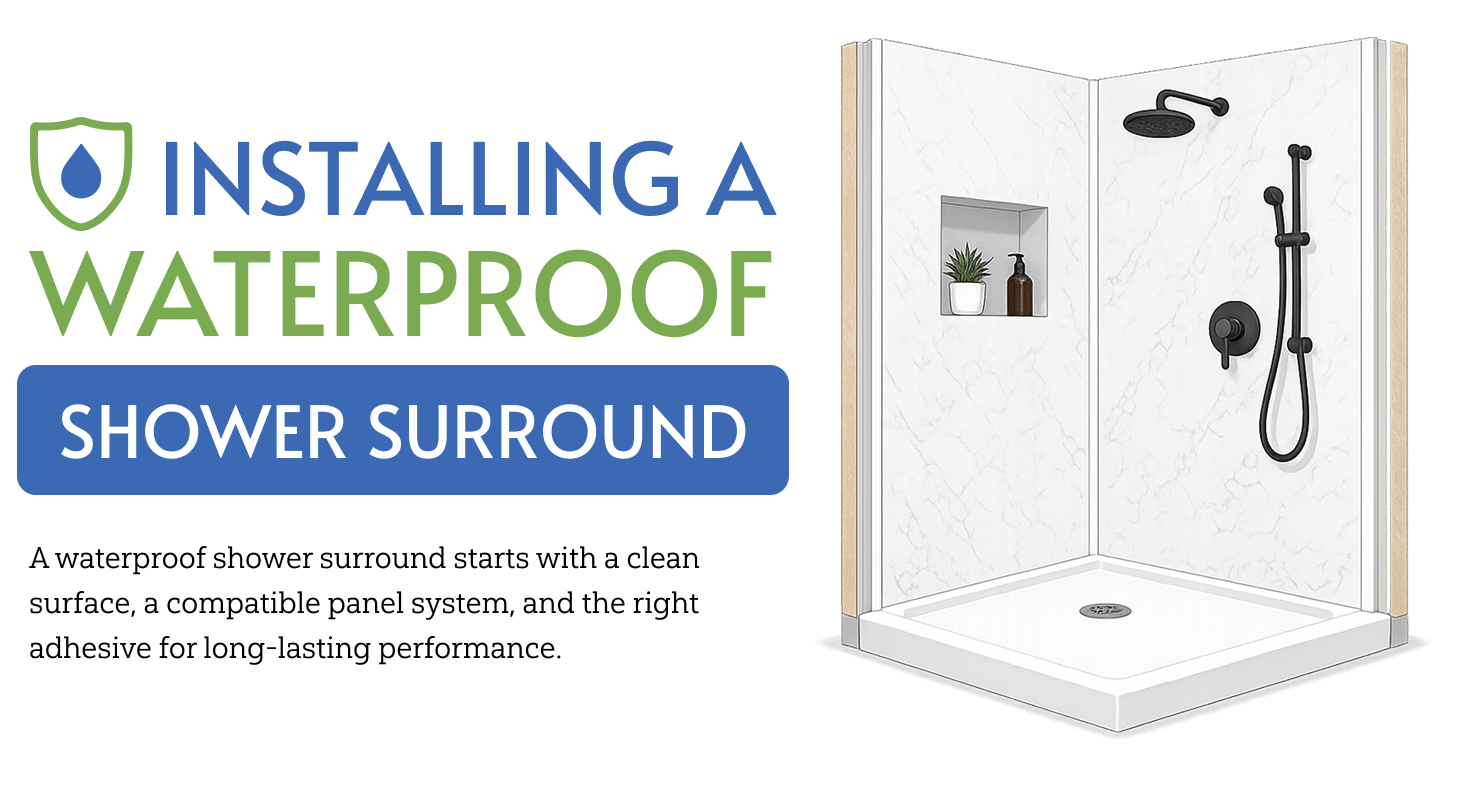
Installing a Waterproof Shower Surround
read more >> -

How to Install FRP and Wall Protection Panels
read more >> -

How to Layer Wainscoting With Wallpaper
read more >>


